
When organisations evaluate people analytics and assessment platforms, Predictive Index (PI) and ThriveMap are sometimes compared, but they actually focus on very different parts of the talent journey.
Predictive Index is a talent optimisation platform that uses behavioural and cognitive data to guide hiring, team design, and employee engagement. ThriveMap, by contrast, is built solely for realistic, pre-hire job assessments – designed to screen candidates objectively, set realistic expectations, and reduce early attrition.
If you’re deciding between Predictive Index and ThriveMap, or wondering if PI is the right tool for your recruitment process, this comparison will help you decide.
| Feature | ThriveMap | Predictive Index |
|---|---|---|
| Core focus | Pre-hire job simulations to measure fit and improve retention | Talent optimisation platform (hiring + team design + engagement) |
| Assessment type | Bespoke or templated job simulations based on real tasks | Behavioural profile (adjective checklist) + cognitive ability test |
| Candidate experience | Single, engaging ,mobile-first job simulation; objective scoring | Personality-style self-report and optional cognitive test; no job preview |
| Customisation | Fully bespoke or Smart Assessment Builder; branded and role-specific | Custom job targets, behavioural benchmarks, interview guides |
| Scoring | Objective 0–100% fit score, benchmarked against applicant pool | Reference profile, behavioural pattern display, percentile cognitive score |
| Use case | High-volume, entry-level and frontline hiring; reducing attrition | Team-building, leadership development, culture mapping, and supplemental hiring |
| Pricing | Transparent annual subscription, unlimited candidates | Per-module annual pricing (starts ~$4,950 per module, per year) |
| Best for | Employers wanting to reduce attrition and speed up time-to-hire | Companies investing in workforce analytics and team optimisation |
The Predictive Index has been around for 65+ years and is widely recognised in the HR world for its behavioural science approach. PI positions itself not just as a hiring tool, but as a talent optimisation platform spanning the entire employee lifecycle.
Its core modules include:
📝 PI Hire – Behavioural Assessment + Cognitive Assessment to screen candidates for behavioural fit and learning agility. Includes job targets, fit ratings, and interview question guides.
👩💼 PI Inspire – Tools for managers to understand employee drives and tailor their leadership approach.
🧩 PI Design – Helps organisations visualise team dynamics and plan team composition based on behavioural profiles.
📊 PI Diagnose – Engagement surveys, heat maps, and action plans to improve employee morale and retention.
PI integrates with 90+ HR tools and is widely used by mid-size and enterprise organisations to improve hiring quality, reduce turnover, and optimise team performance.
Predictive Index is powerful — but it’s not necessarily built for high-volume, speed-sensitive hiring or objective job simulations.
🚫 Not job-specific – PI measures personality drives and cognitive ability but doesn’t simulate real tasks. This means candidates don’t get a realistic preview of the work.
🤔 Potential candidate scepticism – PI’s behavioural assessment is essentially an adjective checklist. Some candidates find personality profiling overly simplistic or intrusive, which can hurt employer brand.
📚 Steep training curve – Many reviewers mention you need PI certification or training to interpret results effectively. This can be a barrier to broad adoption across hiring managers.
💰 High cost per module – Pricing starts at ~$4,950 per module per year, which can add up if you want access to hiring, team design, and engagement tools.
🏭 Not ideal for high-volume hiring – PI is best used as a supplemental decision-making tool, not as a primary screening step for hundreds or thousands of applicants.
⚖️ Subjectivity risk – PI results are designed to “inform conversations,” not make hard decisions. This leaves room for bias if hiring managers overrule or ignore results.
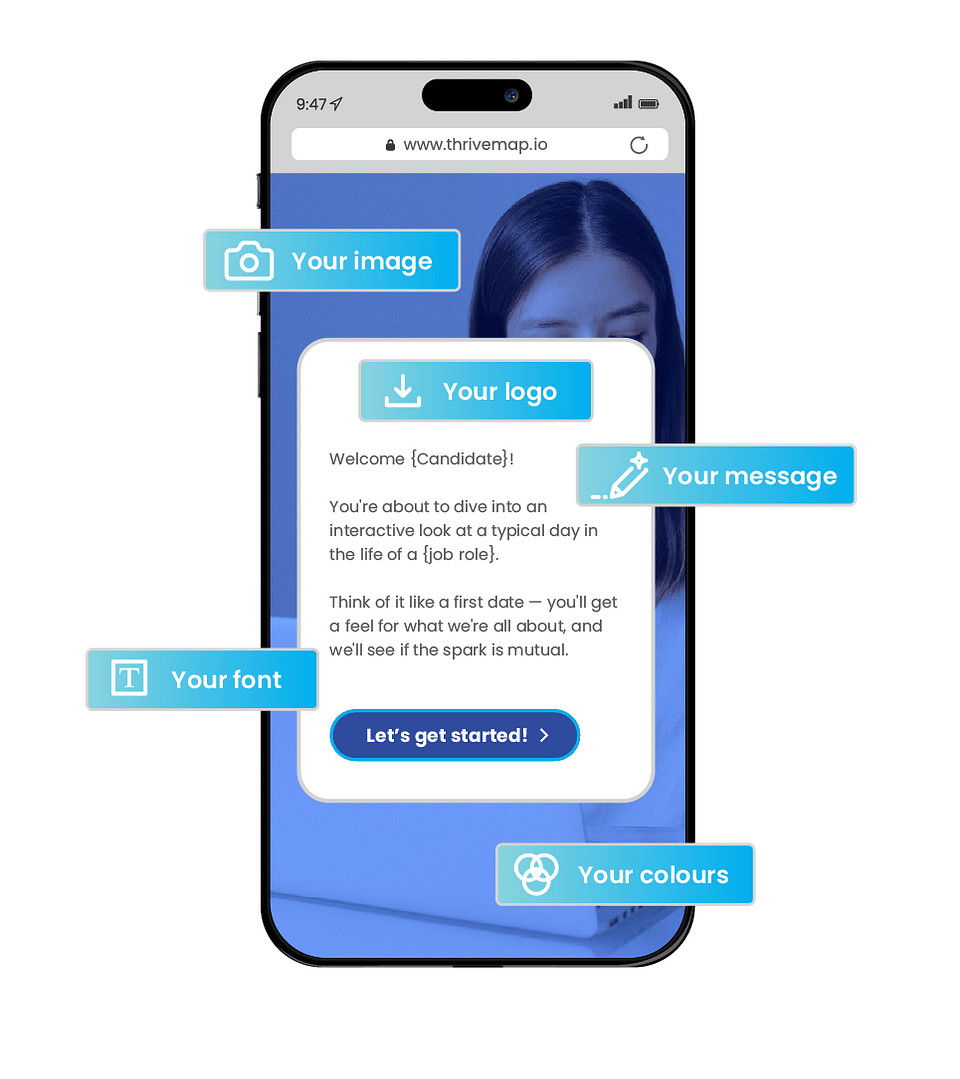
ThriveMap is purpose-built for high-volume hiring where candidate experience and retention are critical. Instead of asking candidates to self-describe, ThriveMap immerses them in a realistic job simulation.
How it works:
🗓️ Candidates experience a “day in the life” of the role, answering scenario-based questions and completing realistic tasks.
Employers can choose between:
🎯 Fully bespoke assessments designed with ThriveMap consultants.
⚡ Smart Assessment Builder for quick, self-serve assessment creation.
Each candidate receives:
📈 An objective 0–100% fit score, benchmarked against the real applicant pool.
Employers get:
🔍 Rich analytics on dropout rates, attribute scores, and candidate behaviour.
This approach improves hiring quality while reducing early attrition — because candidates know exactly what to expect before accepting an offer.
Focuses on measuring core behavioural drives (dominance, extraversion, patience, formality) and cognitive ability.
Focuses on simulating the job itself, giving both candidate and employer an accurate picture of job fit.
Quick personality and cognitive tests, but no job preview — candidates may feel it’s abstract.
Engaging, short, and job-specific; candidates report high satisfaction and 90%+ completion rates.
Improves team fit and manager understanding after the hire, but doesn’t prevent expectation mismatch up front.
Built to reduce attrition by aligning expectations before the hire.
Requires training to interpret behavioural charts and use results effectively.
Simple to roll out; results are easy for hiring managers to interpret.
Excellent for leadership development, team design, and engagement planning.
Excellent for frontline, high-volume roles where speed, fairness, and candidate experience matter most.
Pricing per module; costs can scale quickly if you need multiple solutions (Hire + Inspire + Design).
Transparent annual pricing based on hiring volume, unlimited candidate use for defined roles.


Recruiters often say PI results “confirm what you already know” about a candidate. It’s a useful supplementary tool, but may not add enough value for time-pressed hiring teams screening hundreds of applicants.
ThriveMap customers typically report significant improvements:
Both platforms are valuable — but they serve very different purposes:

