The hiring landscape in 2025 is evolving rapidly. AI-generated applications are flooding inboxes, recruitment trends are shifting constantly, and every week a new “must-have” tool promises to revolutionise hiring. But which hiring trends in 2025 actually matter, and which are just noise? Chris Platts shared his predictions in our February newsletter:
The rise of smarter hiring
With technology advancing, companies are relying more on automation and AI-driven recruitment tools. However, the most effective hiring strategies in 2025 will balance efficiency with human connection. While AI can speed up resume screening, over-reliance on automation can frustrate candidates and drive them away.
The danger of overcomplicating hiring
Many businesses fall into the trap of adopting complex hiring technologies that hinder rather than help. A perfect example is McDonald’s self-order kiosks—designed to streamline ordering but instead they now require 27 clicks just to buy a meal, and attempt upselling multiple times. Recruitment has its own version of this: clunky chatbots, game-based assessments, and convoluted application processes that alienate top talent.
The shift towards candidate-centric hiring
One of the biggest hiring trends in 2025 is the push toward improving the candidate experience. Companies are realising that excessive screening tools and impersonal interactions can deter quality applicants. The best hiring strategies focus on:
- Candidate-first experiences – Simplifying application processes to reduce drop-off rates.
- Data-driven decision-making – Using job analysis tools like Signal to refine hiring criteria.
- Employer branding – Standing out in a competitive talent market by prioritising transparency and communication.
Why proven strategies outlast fads
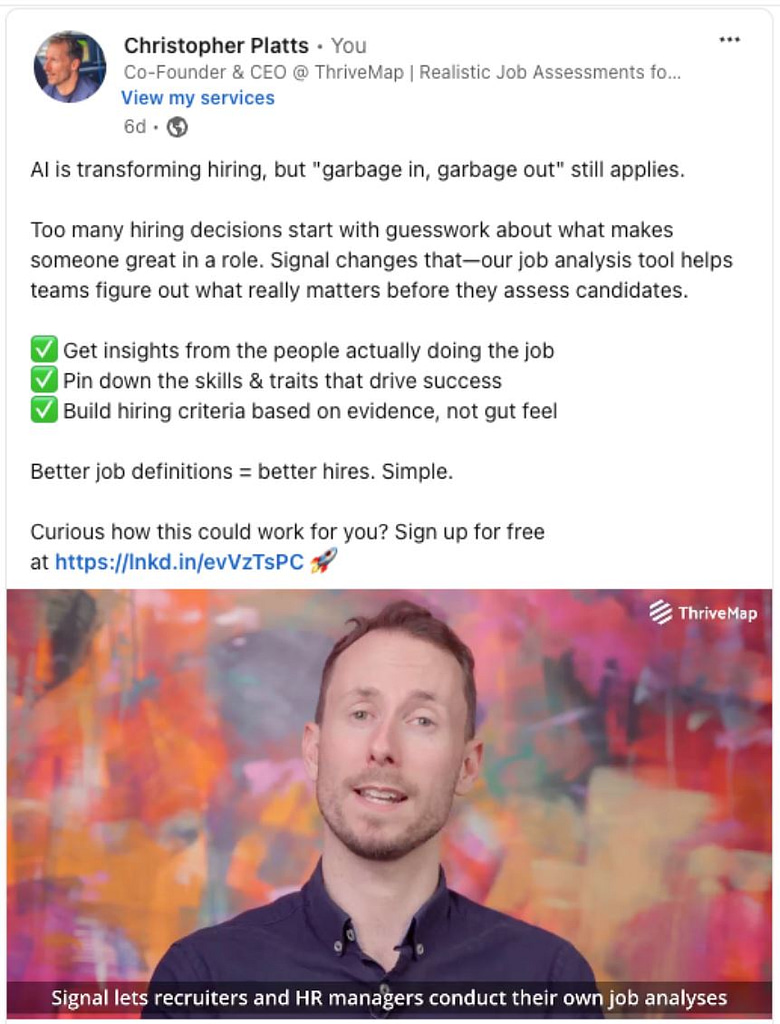
Interestingly, our CEO’s most popular LinkedIn post this month wasn’t about a new tool, but about Signal, a job analysis platform we built four years ago. It’s proof that the best hiring solutions aren’t always the newest—they’re the ones that truly solve problems and improve hiring efficiency.
What to expect in 2025 and beyond
Before adopting the next big hiring trend, ask yourself—does this improve hiring outcomes, or is it just adding to the noise?
Overcomplicating hiring processes with excessive technology can backfire, as seen with overly complex systems that frustrate applicants. The trend towards a candidate-centric approach will continue to dominate, with a focus on streamlining application processes, enhancing employer branding, and making data-driven decisions. Ultimately, proven strategies, such as those that prioritize the candidate experience, will continue to outperform fleeting fads in shaping successful recruitment efforts.
Try Signal free here: thrivemap.io/signal-job-analysis-tool/