Imagine If Job Descriptions Were as Misleading as Online Dating Profiles—Oh Wait, They Already Are
There’s a reason why 55% of employees have quit a job due to a disconnect between the job’s portrayal in the recruitment process and the actual experience—a 15% increase since 2019, according to ThriveMap’s latest research. The hiring process is broken, and at the heart of it lies a simple truth: job descriptions are marketing materials, not reality.
Think about it. How often have you seen job listings that promise a “fast-paced, dynamic work environment” only to find out that means never-ending emails and back-to-back Zoom calls? Or companies advertising “growth opportunities” when there’s nowhere to move except out the door?
This isn’t just a minor frustration for candidates—it’s a critical hiring problem. A study by the Harvard Business Review found that mismatched expectations in job roles contribute significantly to early turnover, with employees leaving once they realize the day-to-day experience doesn’t match what they were promised.
The Cost of Hiring Based on Fiction
- Expectations vs. Reality: ThriveMap’s research shows that 64% of Gen Z workers quit due to job mismatches, making them the most affected demographic.
- Industry Variations: The highest expectation gaps are in public services (69%), retail (68%), and hospitality (66%), where roles often fail to meet candidate expectations.
- Turnover Costs: The CIPD estimates that replacing a single UK hire costs £6,125 on average, rising to £19,000 for managers—not counting productivity losses.
- Trust Erosion: Companies with misleading job descriptions not only see higher churn but also risk their Glassdoor ratings plummeting, making future hiring even harder.
The Fix: Job-Realistic Hiring
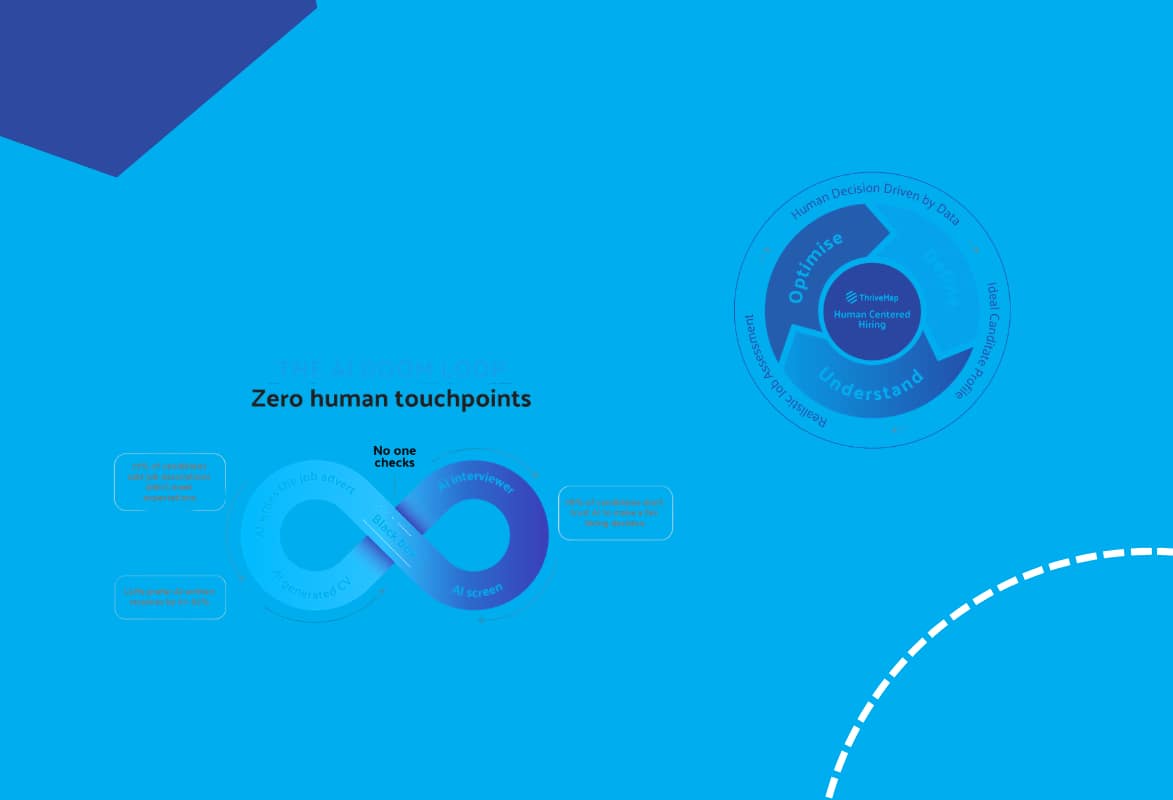
Instead of selling dreams, companies should offer candidates a preview of the reality of the job before they accept the offer. ThriveMap’s research reveals that candidates who experience realistic job assessments are 3x more likely to stay compared to those who rely on job descriptions alone.
✅ Realistic job assessments give candidates an accurate, immersive preview of what the job entails, reducing expectation mismatches and increasing retention.
📥 Download the whitepaper to see how ThriveMap is helping companies tackle this hiring illusion and reduce costly turnover.