Are potential hires vanishing from your recruitment process?
Spending countless hours screening applications for the same roles?
If you answered yes to any of the above, it’s a telltale sign that points to a deeper issue: a leaky recruitment process.
Frontline workers serve as the backbone of most businesses, ensuring smooth operations day in and day out. Yet, filling and retaining these indispensable roles can be tricky.
In this article, we explore the importance of enhancing frontline recruitment processes, how to double the tenure of such workers, and where you can find more best practices, resources and tips to retain your frontline workers.
Why you need to improve your frontline recruitment process
Your frontline staff play a pivotal role in your organisation. They fuel performance, drive profitability, and foster growth. They are also often the first point of contact with your customers and are responsible for maintaining the day-to-day operations. In essence, they are the lifeblood of your business.
However, many companies still rely on an old-school approach to fill these key roles.
The job advert is copied over-and-over when hiring to re-fill vacancies, CVs are then screened for skills that are often not really needed for the job, and there’s an interview that probably doesn’t reflect what the job entails.
This results in high turnover rates, dwindling team morale, and a growing pool of unfilled positions can result from this short-sighted strategy.
Moreover, the impact of a subpar hiring process, including negative Glassdoor reviews, is amplified in the context of high-volume frontline recruitment.
How to double the tenure of your frontline workers
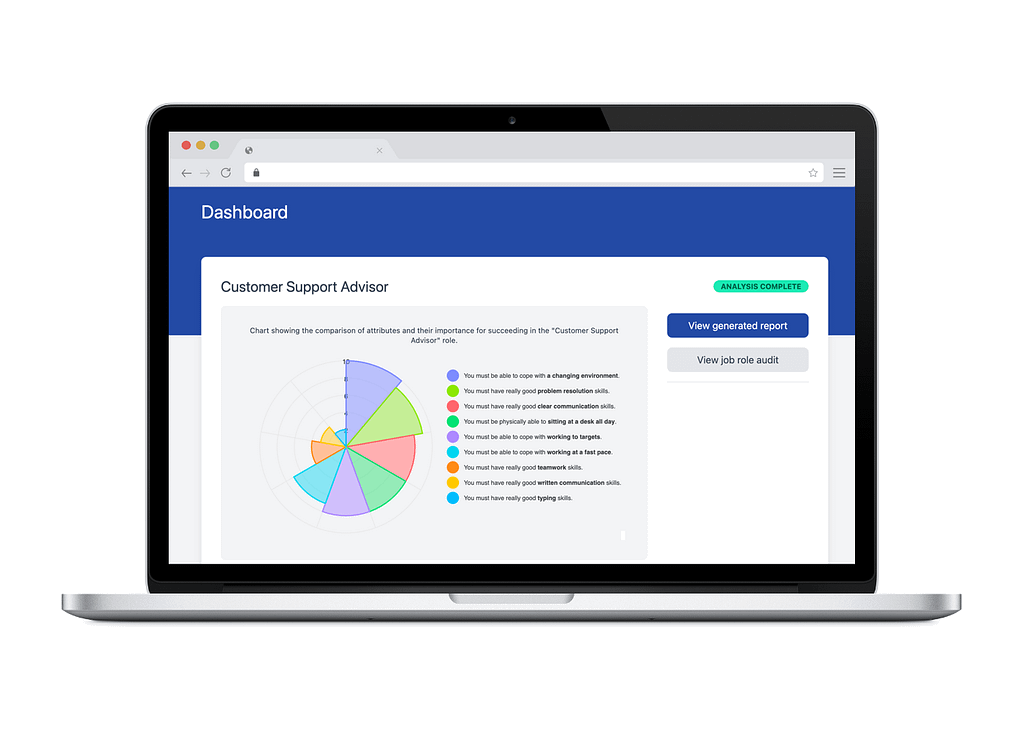
Brands such as Sodexo, Wincanton, and Sainsbury’s know the importance of their frontline workers and have appointed ThriveMap to design and build custom pre-hire assessment solutions that reflect the realities of the role.
Real insights from real workers
The ThriveMap approach involves assessments that provide real insights from individuals who are currently performing the job.
By mirroring on-the-job scenarios and using user-friendly tools, ThriveMap helps recruitment teams to pinpoint top-tier candidates who are more likely to succeed and stay committed to their roles.
With ThriveMap’s pre-hire assessment process in play, candidates for high-volume roles exhibit double the commitment throughout their tenure.
Retaining hourly workers and reducing turnover is crucial for the success and stability of your organisation.
ThriveMap’s innovative pre-hire assessments offer a proven solution to this common challenge. Let us help you build a more committed and resilient frontline team, ensuring the continued growth and success of your business.
Subscribe for insights, debunks and what amounts to a free, up-to-date recruitment toolkit.
About ThriveMap
ThriveMap creates customised assessments for high volume roles, which take candidates through an online “day in the life” experience of work in your company. Our assessments have been proven to reduce staff turnover, reduce time to hire, and improve quality of hire.
Not sure what type of assessment is right for your business? Read our guide.
Other articles you might be interested in
The State of the Assessment Market Report 2026: Now Live
As the new UK National Hiring Strategy highlights, poor hiring decisions come at a significant cost. The strategy estimates that poor hiring decisions cost the UK economy £14.4 billion each year. Unemployment drains a further £61 billion, while inefficient recruitment processes and unfilled vacancies add nearly £150 million more. But the challenge facing employers isn’t […]
How Berkeley achieved 100% graduate retention by optimising their pre-hire assessment
Most hiring teams optimise for speed. Time to hire.Application conversion.Assessment completion rates.Offer acceptance. These metrics are easy to measure and easy to improve. They also tell us very little about whether hiring actually worked. The real test of hiring success happens months later, when new employees decide whether to stay. Across early careers hiring, this […]
Pre-hire assessment completion rates & candidate drop-off by industry
What 200,000+ candidate journeys reveal about how hiring performance changes across sectors Why do candidates complete nearly every assessment in some industries — but never even start them in others? At first glance, the explanation seems obvious. Different sectors have different candidates, different expectations, or different hiring challenges. But analysis of more than 200,000 pre-hire […]