
As the new UK National Hiring Strategy highlights, poor hiring decisions come at a significant cost. The strategy estimates that poor hiring decisions cost the UK economy £14.4 billion each year. Unemployment drains a further £61 billion, while inefficient recruitment processes and unfilled vacancies add nearly £150 million more. But the challenge facing employers isn’t […]
Continue reading
Most hiring teams optimise for speed. Time to hire.Application conversion.Assessment completion rates.Offer acceptance. These metrics are easy to measure and easy to improve. They also tell us very little about whether hiring actually worked. The real test of hiring success happens months later, when new employees decide whether to stay. Across early careers hiring, this […]
Continue reading
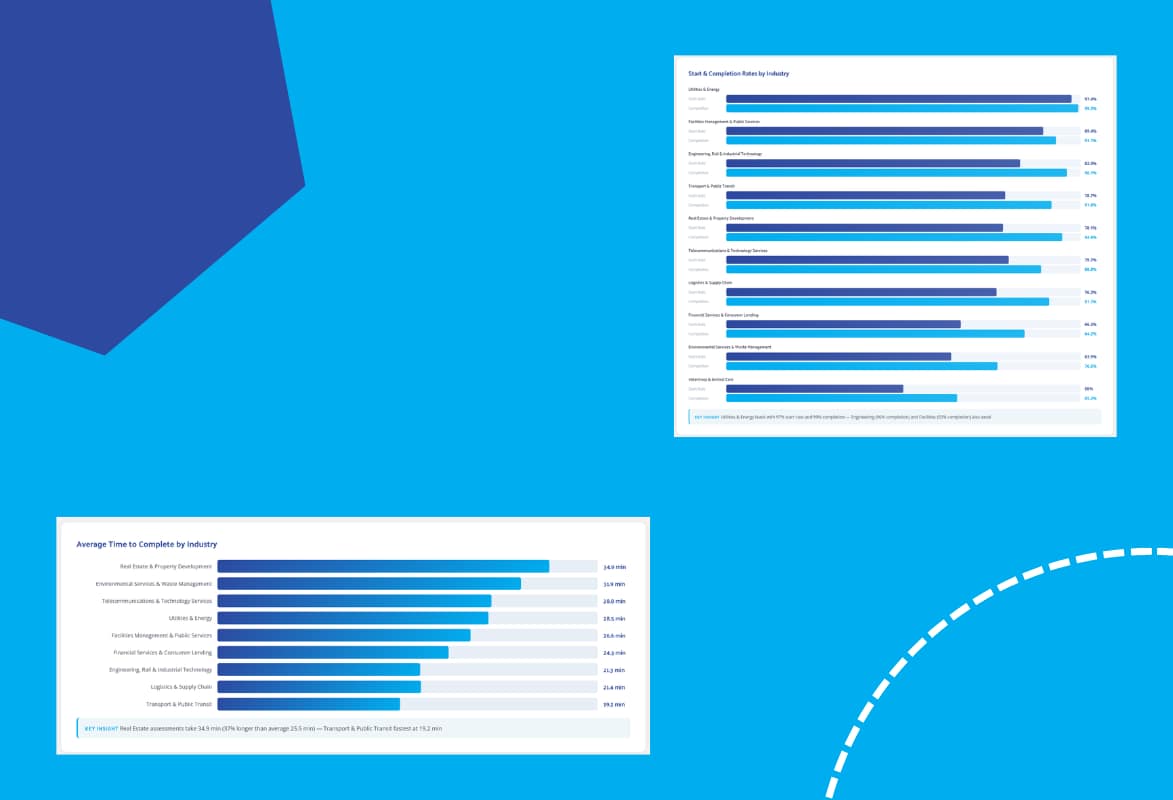
What 200,000+ candidate journeys reveal about how hiring performance changes across sectors Why do candidates complete nearly every assessment in some industries — but never even start them in others? At first glance, the explanation seems obvious. Different sectors have different candidates, different expectations, or different hiring challenges. But analysis of more than 200,000 pre-hire […]
Continue reading
What is ‘job catfishing’ “Job catfishing” describes a specific hiring failure: when the lived reality of a role materially differs from what a candidate expected when they accepted the offer. It’s not about ghosting. It’s not about poor communication during interviews. In fact, most candidates report that information during the hiring process is broadly consistent. […]
Continue reading
One of the biggest shifts in hiring over the past year hasn’t been a new tool, it’s been behaviour. Candidates are increasingly using AI to help them prepare, practise, and sometimes even complete pre-hire assessments. It’s understandable. The tools are accessible, the pressure to perform is high, and the line between “preparation” and “assistance” is […]
Continue reading
The modern candidate selection process is having an identity crisis. On one side, speed. Automation. One-click apply. AI screening. Funnels that look more like e-commerce checkout flows than human decisions. On the other, reality: real jobs, real people, and real consequences when a hire goes wrong. Hiring teams are under pressure to move faster than […]
Continue reading
Most hiring teams are under pressure to improve time-to-fill.That makes sense, open roles create real operational pain. But speed doesn’t tell you whether the person who accepted the role will still be there in three weeks. And when candidates aren’t a good fit, it shows through early attrition, retraining costs, frustrated managers, and leadership asking: […]
Continue reading
How to build remote work culture More than half of employers now offer remote work. Yet over a third are actively pulling people back to the office, citing drops in productivity and culture. The problem isn’t location. It’s design. Most companies are still running office-era systems in a work model that no longer has an […]
Continue reading
Why Most Hiring Systems Measure the Wrong Things Modern hiring processes are built to move people through a funnel. Applications in. Screens out. Interviews. Offer. Start date. Most of the metrics that define success sit at the top of that funnel. Speed to hire. Time to shortlist. Cost per hire. Interview to offer ratio. Those […]
Continue reading