Every conversation about AI in recruitment seems to end in the same place. “AI is saving recruiters hours.”
That’s great. But the more interesting question is what recruiters should actually be doing with those hours. That was one of the biggest themes coming out of RecFest UK 2026. The technology is improving at an incredible pace. It can write job adverts, screen applications, summarise interviews and automate countless administrative tasks.
What it can’t do is solve recruitment’s biggest challenge: hiring people who genuinely want the job they’re applying for. AI can match a candidate to a job description, but it can’t tell you whether they’ll enjoy working night shifts, thrive in a busy warehouse or feel comfortable dealing with frustrated customers every day. More importantly, it can’t tell you whether the reality of the role matches the picture the candidate has built in their head.
That’s a significant challenge when our research found that 66% of candidates have left a job because it wasn’t what they expected, while 72% say they’ve accepted a role that wasn’t accurately represented during recruitment.
In other words, we’re getting much better at matching people to jobs. We’re still not very good at matching people to the reality of those jobs.
As AI takes over more of recruitment’s administrative work, that changes where talent acquisition teams create value. Here are six skills we believe will define the next generation of TA professionals.
1. Think beyond filling vacancies
The best recruiters won’t be measured by how many roles they fill. They’ll be measured by the business outcomes they create.
That means understanding why a role exists, what success looks like after someone joins and how hiring contributes to wider business goals. Time to hire and cost per hire will always matter, but retention, performance and quality of hire matter far more.
2. Become a trusted adviser
For years, many recruiters have been rewarded for processing vacancies quickly. Increasingly, they’ll be valued for challenging hiring decisions.
Does this role really need five interview stages? Are all of the “essential” requirements actually essential? Is the hiring manager solving the right problem?
The future TA professional looks less like an administrator and more like an internal consultant. As Akbar Karenga discussed at RecFest, hiring managers should be treated as customers rather than simply people submitting requests into a recruitment function. That changes everything. Relationships matter. Feedback matters. Long term trust matters.
3. Build a culture of continuous improvement
AI shouldn’t simply help recruiters process more candidates. It should create space to improve the hiring process itself.
Where are candidates dropping out? Which interview stages genuinely predict success? Which assessments provide useful insight, and which simply create friction?
The strongest TA teams will spend less time managing recruitment processes and more time refining them.
4. Understand candidate behaviour
This may become the most valuable skill of all.
For years, recruitment technology has focused on helping employers filter candidates. We think the bigger opportunity is helping candidates decide whether they actually want the role. Those aren’t the same thing.
A CV tells you whether someone appears capable. It tells you almost nothing about whether they’ll enjoy doing the job every day.
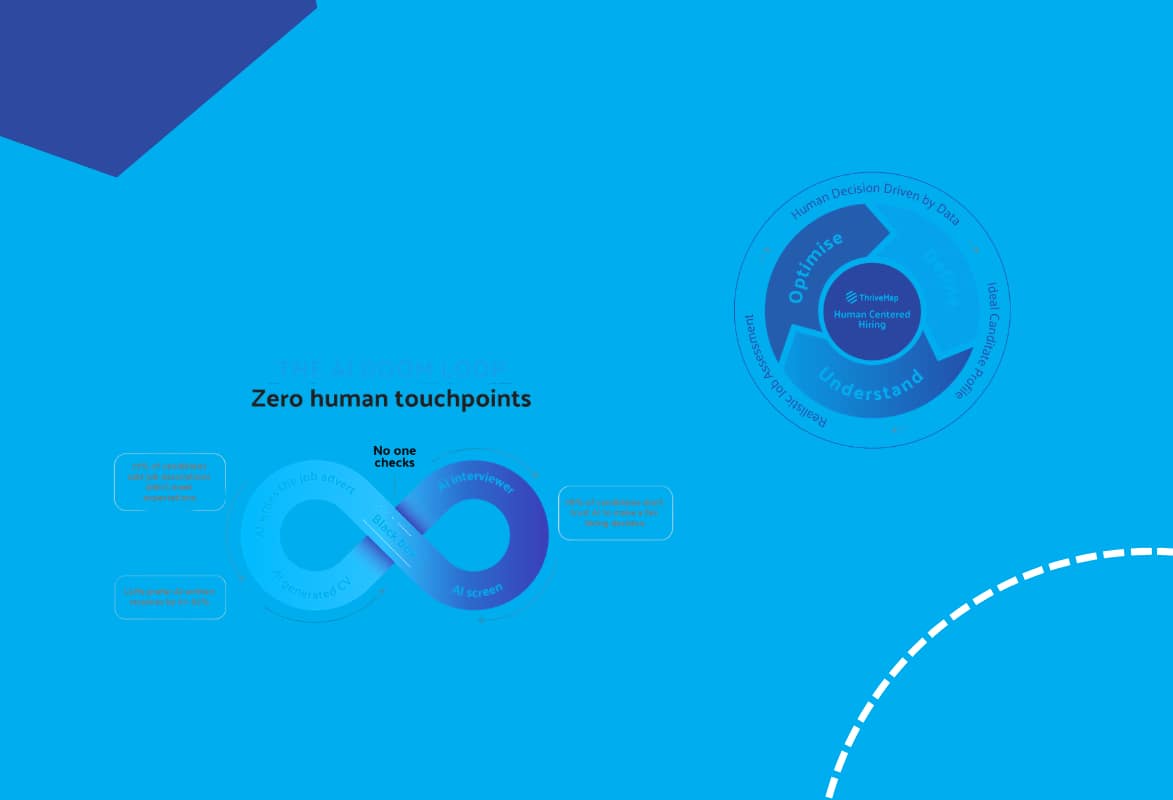
That’s why realistic job assessments are becoming increasingly important. Instead of asking candidates to imagine the role, they experience realistic scenarios, understand the challenges and make a more informed decision before accepting an offer. The result isn’t just better hiring decisions. It’s better informed candidates.
5. Know where AI stops
AI is exceptional at recognising patterns, but it’s far less effective at understanding context.
It doesn’t know whether a hiring manager’s expectations are unrealistic. It doesn’t know whether a team is struggling with poor leadership. It doesn’t know whether someone who’s perfect on paper will hate the reality of the role.
Those decisions still require human judgement. As AI becomes more capable, the value of that judgement only increases.
6. Measure what happens after the hire
Perhaps the biggest shift is how success is measured.
Historically, recruitment ended when someone accepted an offer. Increasingly, that’s where the real measurement begins.
Did they stay? Did they perform? Would they choose the role again? Would the hiring manager hire them again?
Those are the questions businesses actually care about because they’re the questions that separate successful recruitment from successful hiring.
Recruitment isn’t disappearing. It’s evolving.
AI will continue reducing the amount of time recruiters spend on repetitive administrative work, and that’s a good thing. But automation doesn’t reduce the importance of talent acquisition. It raises the standard.
The TA professionals who thrive over the next five years won’t simply become experts at using AI. They’ll become trusted advisers who understand people, improve hiring systems, interpret data, challenge assumptions and help candidates make better career decisions.
Because while AI can tell you who’s qualified for a job, it still can’t answer the question that matters most:
Does this person actually want to do it?