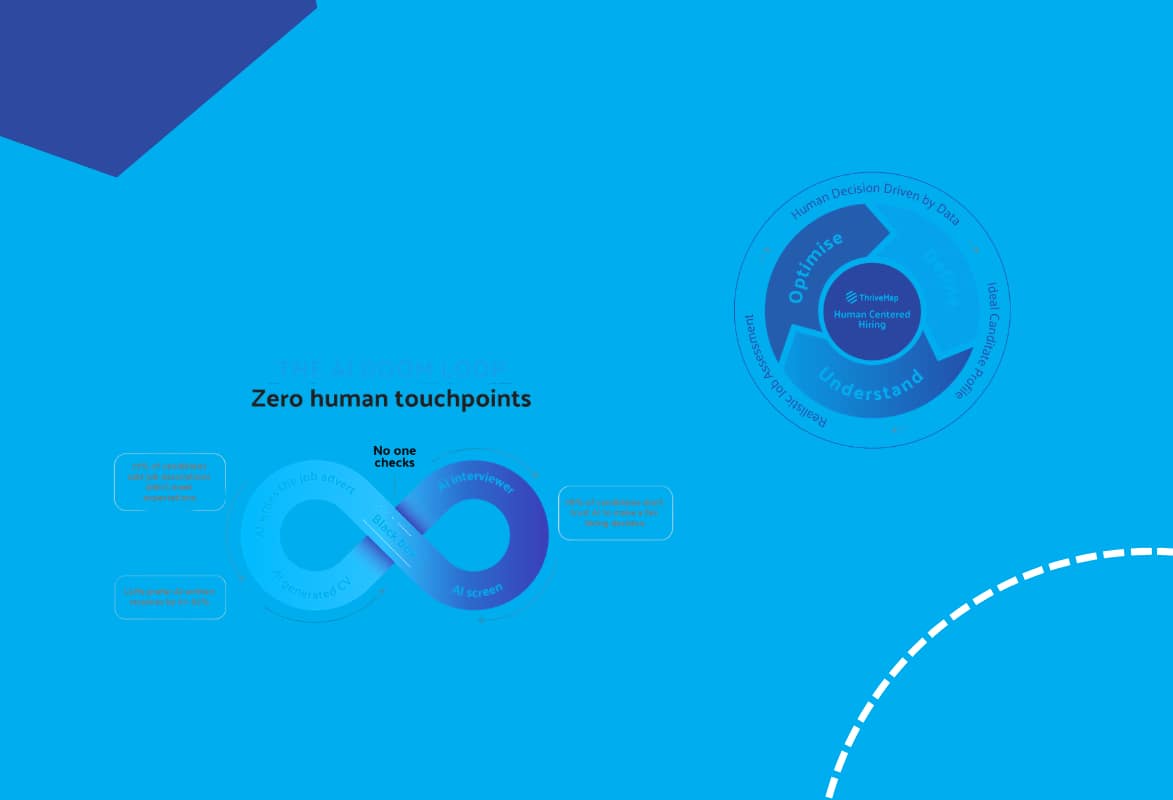
A guide to fair, consistent, and predictive selection methods for entry-level hiring.
Every week another Reddit post goes viral, exposing the strange, improvised “tests” candidates face.
And this week, one Reddit post summed up the whole problem in a single screenshot.
A hiring manager proudly described their “punctuality test”:
They join a Zoom call 15 minutes early.
They sit silently and wait.
If the candidate doesn’t also arrive at least 5 minnutes early, they disconnect before the scheduled time and ghost them.
They never explain why.
They believe turning up 15 minutes early to an interview and waiting 10 minutes is an efficient way to weed out candidates.
This isn’t just bad practice — it’s what happens when organisations lack proper hiring processes, policies, and validated selection tools whilst trying to keep up with huge volumes of applicants.
When structure is missing, managers invent their own rules.
And those rules create bias, unpredictability, legal risk, and higher early attrition.
This is why building a proper, job-relevant hiring framework matters more than ever.
Why these “hidden tests” keep appearing
When hiring teams don’t have structured, predictive processes, managers fill the gap with personal rules:
- “Join early or you’re late.”
- “If they don’t send a thank-you email, reject them.”
- “If they look nervous on video, they’re not a fit.”
- “If their CV formatting is off, bin it.”
None of these tests map to job performance.
None are consistent.
None are fair.
These rules have no predictive validity, yet without processes, systems and tools, these improvised tests are what commonly shapes hiring decisions.
Decades of research show these tests perform at 0.00–0.10 validity — the statistical equivalent of winging it.
Improvised tests create:
1. Inconsistency
Different managers, different rules, different results.
2. Bias
Candidates are judged on circumstances, not capability.
3. Legal exposure
No documentation. No fairness checks. No audit trail.
4. Low predictive accuracy
None of these shortcuts correlate with performance, retention, safety, or readiness.
5. High early attrition
Because candidates weren’t shown the realities of the job.
And yet they’re everywhere — especially in high-volume hiring.
This is not a hiring strategy.
It’s a coin toss dressed up as a process.
This is the natural outcome of having no structured selection policy.
What a proper entry-level hiring process should look like
If you want to avoid improvised, biased mini-tests like the Reddit example, you need structure.
A modern, fair, and predictive entry-level hiring process should be:
✔ Structured and consistent
Clear steps. Same process across managers and locations.
✔ Job-relevant
Assessment tasks that reflect real workplace conditions.
✔ Fair and defensible
Tools that can withstand a fairness audit.
✔ Predictive
Scores that correlate with retention, performance, and onboarding success.
✔ Transparent
Candidates know what they’re signing up for.
✔ Simple for managers to follow
Reduce discretion, increase consistency.
Your full framework for this is here:
➡️ Entry-Level Hiring Best Practice Playbook
What actually works — Realistic Job Assessments
Improvised tests don’t work.
Personality questionnaires barely work.
Unstructured interviews rarely work.
The assessments that consistently deliver the strongest predictive accuracy are Realistic Job Assessments.
These measure how people behave in real job conditions:
- problem solving
- judgement
- prioritisation
- responding to customers
- following process
- working at the expected pace
Because they reflect day-one reality, they deliver:
- higher accuracy
- lower early attrition
- stronger fairness
- higher candidate trust
- better hiring manager confidence
- defensible decisions
Learn more here:
➡️ https://thrivemap.io/realistic-job-assessments/