Attention to detail is one of the most commonly assessed skills in recruitment, and for good reason. In many roles, the ability to spot errors, follow processes and work accurately has a direct impact on quality, compliance and customer outcomes. So it makes sense that employers invest in attention to detail tests.
The problem is not that skills-based assessments are ineffective. It is that they are often expected to answer questions they were never designed to answer.
Attention to detail is not a single transferable skill. A copywriter notices awkward phrasing that an engineer may skim over. An accountant quickly spots a missing decimal point that a marketer might never see. A nurse may immediately identify a missing patient detail that would be invisible to someone outside healthcare. Asking all four people to complete the same generic attention to detail test tells you very little about how carefully they will perform their job.
That is why context matters.
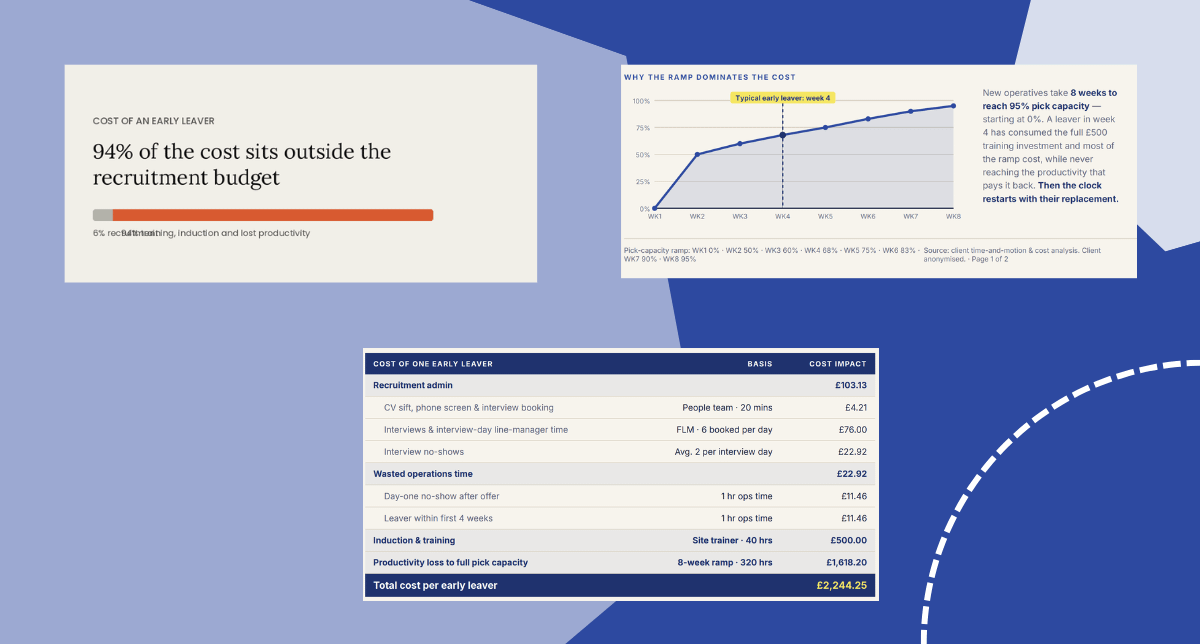
A candidate can score exceptionally well on an attention to detail assessment, perform strongly in the role and still leave within their first few weeks.
Here are three ways to ensure your attention to detail assessments actually help you hire the right people.
1. Build context into the assessment
Many organisations still rely on generic attention to detail tests that involve spotting spelling mistakes, comparing strings of numbers or identifying differences between images.
While these exercises measure accuracy, they often bear little resemblance to the work candidates will actually perform.
Research has consistently shown that work sample assessments are among the strongest predictors of future job performance because they ask candidates to demonstrate the skills required in the role itself, rather than measuring abstract ability alone.
Instead of asking a customer service candidate to identify errors in a block of text, ask them to review a customer email. Instead of asking a marketing candidate to compare spreadsheets, ask them to proof a campaign before it goes live. If you’re hiring an accountant, ask them to review a financial report. If you’re recruiting a software developer, ask them to identify bugs in a piece of code.
With a Realistic Job Assessment, the more confidence you can have that success in the assessment translates into success in the role.
This is where many hiring processes fall short.
Attention to detail assessments are designed to answer one question.
Can this person perform the work accurately?
They do not answer another question that is just as important.
Will this person still want this job once they understand what it is actually like?
Our latest State of Market Assessment Report, based on responses from more than 1,000 employees, found that 72% of employees who experienced a mismatch between the job they expected and the reality eventually left the organisation. More importantly, 66% said that mismatch was the reason they resigned.
The biggest mismatches were not about capability. They were about expectations.
- 67% experienced a mismatch in responsibilities.
- 49% experienced a mismatch in the working environment.
- 45% experienced a mismatch in hours or flexibility.
- 31% experienced a mismatch in pay.
- 16% experienced a mismatch in location.
None of these issues would be identified through an attention to detail assessment.
A candidate can be meticulous, organised and highly capable while still deciding a few weeks later that the role is not what they expected. Improving assessment accuracy alone will not solve an expectation problem.
3. Help candidates rule themselves out
The best hiring processes do not simply identify the strongest candidates. They also help unsuitable candidates decide the role is not for them before they accept an offer.
Decades of research into Realistic Job Assessments has shown that giving candidates an honest picture of a role improves expectation accuracy and reduces voluntary turnover. Candidates who understand both the positives and the challenges are more likely to make informed decisions and remain committed once they join.
This means showing candidates what the work is actually like.
Bring the job to life. Explain what success looks like after six months. Be honest about the pace, workload, culture and the parts of the role people tend to find challenging. Some candidates may withdraw. That is not a failure. It is far less costly for someone to opt out during recruitment than to resign after onboarding, training and several months in the role.
The strongest hiring strategies combine evidence based assessments with evidence based information. They measure whether someone can do the job while ensuring candidates understand what the job actually involves.
When organisations improve both assessment quality and expectation accuracy, they are far more likely to hire people who perform well and choose to stay.
Download: The Candidate Expectation Gap Playbook
Want to reduce early attrition before employees reach day one?
Download The Expectation Gap Playbook to discover:
- The expectation gaps driving early attrition.
- How to build realistic job previews candidates actually engage with.
- Examples from leading employers.
- A framework for combining assessments with realistic job information.
- A practical checklist to audit your current hiring process against the latest evidence.