How to Hire the Best-Fit Customer Experience Advisors at Scale
5 minute read
Posted by Emily Hill on 14 January 2025
Recruiting a team of exceptional customer experience advisors requires precision. Why? Because these hires directly influence customer loyalty, brand reputation, and, ultimately, business growth. But here’s the challenge: no two customer experience advisor roles are alike. What works for one organisation may not be effective for another. Without clarity on the skills that truly matter, businesses risk making mismatched hires, leading to inefficiencies, low retention, and lost revenue.
When hiring at scale, the stakes are even higher. The ability to hire fast, accurately, and consistently becomes crucial. So, how can you get it right? Let’s explore some common challenges, key metrics, and best practices for scaling your recruitment efforts.
What Does a Customer Experience Advisor Do?
Customer experience advisors are often the frontline connection between your company and its customers. Their mission? To ensure every interaction leaves a positive impression. Depending on the industry and business needs, their responsibilities may include:
Resolving customer issues efficiently and empathetically.
Gathering and analysing feedback to drive service improvements.
Building strong relationships to foster loyalty.
Proactively retaining customers through clear, helpful communication.
However, these responsibilities can vary significantly by industry, company culture, and role requirements. For example:
In SaaS: Technical problem-solving and the ability to explain complex systems are key.
In retail or hospitality: Empathy, upselling, and relationship-building take priority.
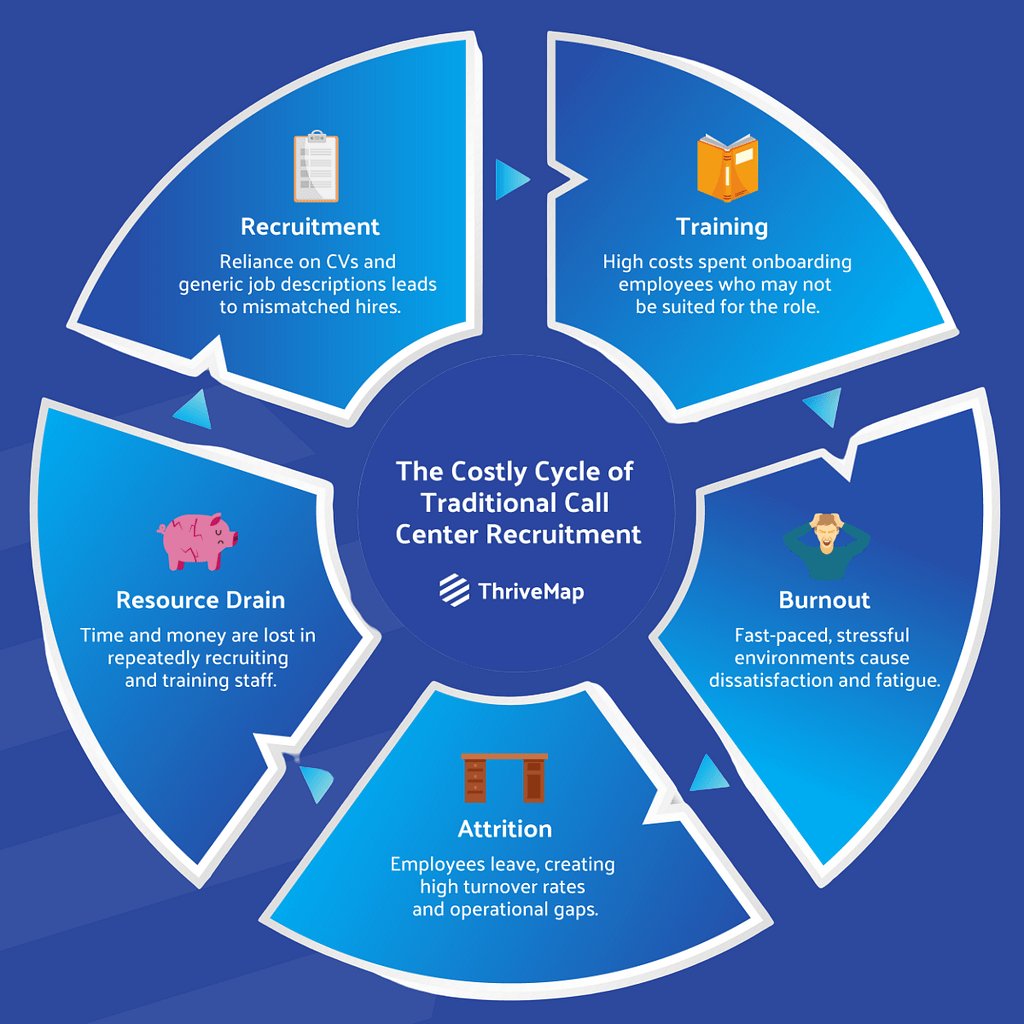
When hiring at volume, relying on generic job hiring criteria or assumptions can lead to poor hires. The result? Inefficiency, reduced performance, and higher attrition.
Common Challenges in High-Volume Hiring
Hiring at scale comes with its own set of challenges. In high-volume recruitment, especially for customer-facing roles, the risks of bad hires escalate. Common issues that senior recruiters face include:
Inconsistent candidate quality: Without clear hiring criteria, it’s easy to lose track of what’s important, resulting in mismatched candidates.
Extended time-to-hire: The pressure to fill roles quickly can lead to rushed decisions, compromising long-term success.
Lack of fit with company culture: A great candidate may have the right skills but might not align with your organisation’s culture, affecting their performance and retention.
Costly attrition: High attrition is a key metric that signals misalignment in your hiring process.
The need for a data-driven approach to hiring has never been more crucial.
The Skills That Matter
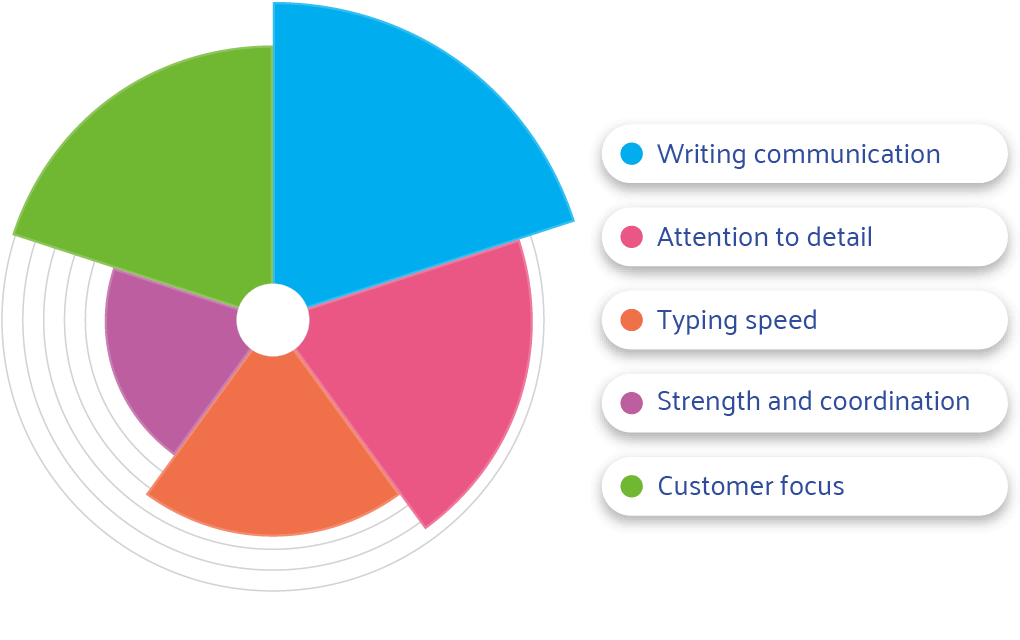
The most successful customer experience advisors depend heavily on the context of the role. Research shows that key competencies can include:
Sales and persuasion skills: In industries focused on growth and customer retention.
Technical expertise: In fields like SaaS, where troubleshooting is crucial.
Empathy: For customer service-based roles that require deep emotional intelligence.
Analytical abilities: For roles focused on gathering feedback and recommending process improvements.
However, a 2023 McKinsey report found that 73% of businesses struggle to define the exact skills needed for customer-facing roles. This lack of clarity leads to inefficiencies in both hiring and onboarding. This is why tailoring your hiring criteria is essential.
You need to align your criteria with your business’s unique needs to improve recruitment outcomes.
The Power of Signal by ThriveMap
This is where Signal by ThriveMap comes in. As a tool that gathers actionable insights directly from your team, it helps you clarify exactly what is needed to succeed in these roles. Signal’s powerful features allow you to identify:
The key tasks performed in the role: What does the job really entail?
The competencies and behaviours essential for success: What are the qualities that make someone excel in this position?
The realities of the role: What should candidates expect on a day-to-day basis?
By leveraging these insights, you can start to get a picture of your Ideal Candidate Profile (or get us to do it for you) that will accurately reflect the competencies needed for success. Signal helps you align your hiring criteria with the skills and behaviours that matter, making it easier to scale your hiring process while maintaining a high standard of quality.
Signalis the first step in how we design your bespoke Realistic Job Assessment. Once we have gathered these insights, ran workshops with your hiring team, and achieved hiring criteria alignment, (more about our best practice high-volume recruitment process here) our team create realistic “day-in-the-life” scenarios that simulate the challenges candidates will face in the role in your custom portal. This not only ensures that your hiring process is aligned but also offers an objective way to assess candidates, reducing bias and improving long-term performance.
Try Signal for Free
The reality is that hiring at scale doesn’t have to result in high attrition. (Check out the results we achieved for one of Canada’s largest companies, Telus). With the right tools and a clear understanding of the skills and behaviours you need, your recruitment process can be more efficient, accurate, and aligned to your business needs.
Signal by ThriveMap helps you gather the insights you need to make informed, data-driven decisions. Take the first step toward improving your hiring process today.
Subscribe for insights, debunks and what amounts to a free, up-to-date recruitment toolkit.
About ThriveMap
ThriveMap creates customised assessments for high volume roles, which take candidates through an online “day in the life” experience of work in your company. Our assessments have been proven to reduce staff turnover, reduce time to hire, and improve quality of hire.
Not sure what type of assessment is right for your business? Read our guide.
Other articles you might be interested in
Principles and best practices for pre hire assessment design
A pre hire assessment can look sophisticated, feel engaging and process thousands of candidates without measuring anything especially useful. The quality of an assessment is not determined by how impressive the technology appears or how many question formats it contains. It depends on whether the assessment measures capabilities that genuinely matter in the job, produces […]
The AI Doom Loop: Why automated hiring is screening out the people you actually want
Job applications grew four times faster than job openings in the first half of 2024 alone, and that gap has only widened since. Gartner projects that by 2028, one in four job candidates globally will be fake: AI-generated profiles with fabricated resumes, cloned voices, and deepfaked video sitting through interviews that were never a real […]
Want to assess attention to detail in your hiring process? Here’s how to ensure you hire the right person
Attention to detail is one of the most commonly assessed skills in recruitment, and for good reason. In many roles, the ability to spot errors, follow processes and work accurately has a direct impact on quality, compliance and customer outcomes. So it makes sense that employers invest in attention to detail tests. The problem is […]