Hiring one person can feel tough enough. Hiring hundreds—or even thousands—within a matter of weeks? That’s high volume recruiting. It’s a different world of talent acquisition, and it comes with its own challenges, processes, and tools.
High volume recruiting—sometimes called volume hiring or mass recruitment—is the process of hiring large numbers of employees in a short timeframe. It’s common in industries with seasonal peaks, high turnover, or frontline roles that need consistent staffing.
Why high volume recruiting matters today
High volume recruitment teams across the world are under pressure. Labour shortages, rapid turnover, and seasonal surges mean many organisations need to scale their hiring quickly.
When done poorly, high volume hiring drains recruiter time, drives up costs, and leads to high early attrition. An effective high volume hiring strategy helps deliver the right people at the right time—without sacrificing candidate experience.
- 55% of frontline workers have left a job because it didn’t meet their expectations.
Industries and roles that rely on high volume recruiting
You’ll find volume hiring in:
The challenges of high volume recruiting
Recruiting at scale isn’t just “more of the same.” It introduces unique hurdles:
The high volume recruiting process
There’s no single way to run high volume recruitment — the right process depends on your tools, your hiring goals, and the types of roles you’re filling. That’s why we created the High Volume Recruitment Playbook: a step-by-step guide that shows you exactly how to build a process that works.
Inside, you’ll find:
- Recommended setup and tools – the tech stack and resources that make scale manageable.
- Hiring criteria alignment – how to get recruiters, managers and stakeholders on the same page.
- Best practice, skills-based processes for high-volume roles, including:
- Call centre staff
- Warehouse operatives
- Retail teams
- Graduate and apprenticeship intakes
- Hospitality roles
👉 Download the Playbook to access the full process, templates, and proven strategies.
Best practices for high volume recruiting
To make high volume hiring efficient and fair, leading employers are:
- Automating repetitive steps like CV screening and interview scheduling
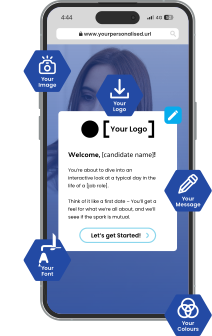
- Using Realistic Job Assessments to show candidates what the role is really like (reduces poor fit)
- Keeping applications mobile-friendly and simple
- Communicating clearly and often with candidates
- Analysing hiring data to continuously improve the process
The role of technology
Modern high volume recruiting is powered by technology:
- Applicant Tracking Systems (ATS) to handle scale
- Programmatic job advertising for cost-efficient reach
- Candidate self-scheduling tools to cut admin
- Assessment platforms like ThriveMap, which give candidates a realistic preview of the job while providing objective fit scores
Why use pre-hire assessments for high volume hiring?
When you’re managing thousands of applications, traditional screening methods simply can’t keep up. Pre-hire assessments give you a scalable way to quickly identify candidates with the right skills and behaviours, while also giving applicants a fair, consistent experience. For high volume hiring, they cut through the noise: reducing recruiter workload, speeding up decisions, and lowering early attrition by making sure only genuinely well-matched candidates progress. With realistic job assessments, candidates also get a preview of the role itself — meaning fewer surprises, better engagement, and stronger long-term fits.
Example: Safelite – Hiring at Scale, Saving $1.1m
Safelite needed to hire thousands of technicians across the US. Their old process was slow, inconsistent, and costly — with poor-fit candidates slipping through and high early attrition driving up training costs.
By introducing ThriveMap’s realistic job assessments, candidates got a clear picture of the role before applying. That shift meant fewer drop-outs, better alignment between expectations and reality, and a huge financial impact: $1.1 million saved in reduced training costs, alongside faster hiring.
Read the case study
Example: Wincanton – Streamlining Graduate and Apprentice Hiring
Wincanton faced a different challenge: bringing consistency and fairness to their graduate and apprentice recruitment. Screening calls were eating up recruiter time, and candidates weren’t always clear on what the roles involved.
With ThriveMap, Wincanton built tailored assessments that reflected the real work environment. Recruiters cut phone screening time by nearly a third, while candidates reported a better, more engaging experience. The result: a more efficient process and a stronger match between applicants and roles.
Read more high volume hiring case studies
ThriveMap’s approach to high volume recruitment
High-volume recruiting doesn’t have to mean high attrition. In fact, most of our customers see a reduction in attrition by more than 30%.
Here’s how our pre hire assessments for high volume hiring works:
1. Build assessments around your reality
Using Signal and our hiring criteria alignment process, we build your assessment to reflect the skills, behaviours, and conditions that actually drive success in your roles.
2. Candidates experience the role before they apply
Applicants complete an assessment that mirrors the day-to-day realities of the role. They see what the work is really like, and you see how they perform in context. The result is a stronger match: candidates arrive prepared and engaged, while you avoid costly mismatches.
3. Identify top candidates with clear analytics
The ThriveMap analytics portal integrates with most ATS systems, giving you an instant view of who’s the best fit. Recruiters get actionable data, not guesswork, so decisions are faster, fairer, and easier to justify.
Next steps
High volume recruiting is all about balancing speed with quality. Get it wrong, and you’ll face wasted costs and constant rehiring. Get it right, and you’ll build a scalable, fair, and candidate-friendly process that fuels your business growth.
With ThriveMap’s Realistic Job Assessments, you don’t have to choose between fast hiring and the right hiring. You can have both.